Written By: Jerry Warner and ChatGPT4
Last Updated: October 29, 2025
Introduction: A New Chapter Begins
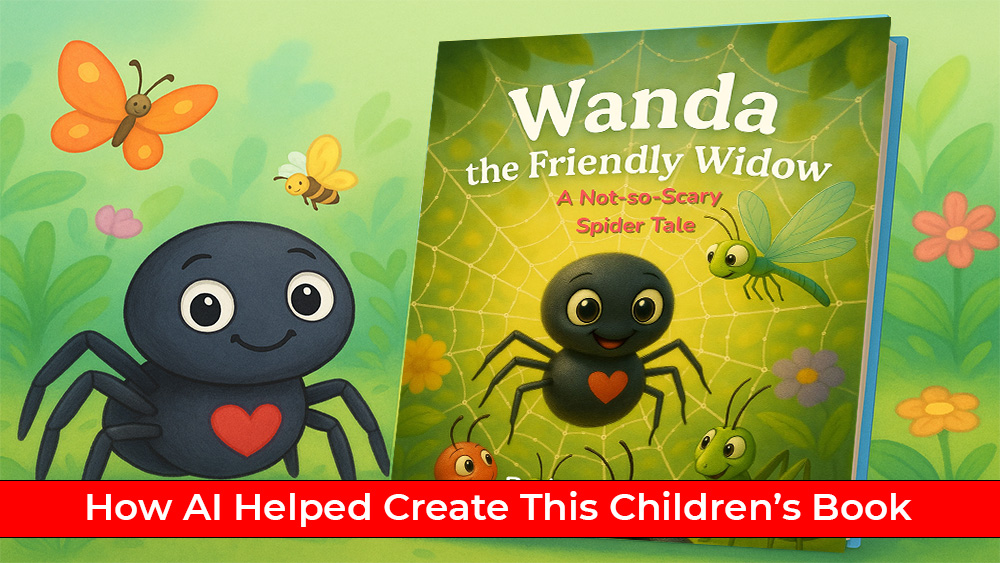
After months of storyboarding, designing, revising, and late-night testing, Wanda the Friendly Widow is officially published and available on Amazon!
This project began as a fun experiment in AI children’s book publishing — a creative challenge to see how far modern AI tools could take one idea from a blank page to a beautifully illustrated story ready for print and Kindle.
If you’ve ever wondered whether AI can help you write and publish your own book, this post is for you. Below, I’ll walk you through Wanda’s story, how AI tools powered every stage of production, and the key lessons that will save you time on your next creative project.
👉 Watch the launch video below or grab your copy on Amazon 🛒
Meet Wanda — The Story That Started It All
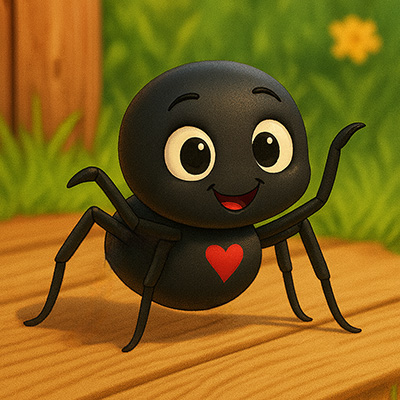
Wanda is a not-so-scary black widow spider who lives in a bright garden filled with buzzing and fluttering friends. She isn’t feared or frightening — she’s just lonely. All she wants is to be accepted for who she is.
Through Wanda’s eyes, children learn that kindness and courage can overcome fear and misunderstanding. Each page balances gentle humor with soft, colorful illustrations designed to make even the creepiest crawlers look cute.
The book’s message is simple yet powerful: everyone deserves a friend — even a spider.
When I first outlined Wanda’s story, I wanted to prove that AI could support, not replace, creativity. The result is a heartfelt story built by human imagination + AI innovation working together.
How AI Helped Bring Wanda to Life
- Writing and Character Development with ChatGPT
To begin with, the creative spark began right here in ChatGPT. Together, we brainstormed character traits, plot beats, dialogue tone, and moral themes. ChatGPT helped refine each chapter outline until the story felt cohesive and age-appropriate for early readers.
Once the structure was set, I used iterative prompts to polish the narration, balancing educational value with emotional depth.
“Wanda wants a friend — but she’ll need bravery and kindness to find one.”
– early story note from ChatGPT session
- Illustrating Wanda with DALL-E 3
Next, with the script complete, DALL-E 3 became the visual engine. Prompts like “cute friendly black-widow spider, 3 legs on each side, heart on chest, in a garden with colorful bugs” generated hundreds of images.
From there, I curated the best versions and adjusted proportions, facial expressions, and colors in Photoshop. One small tweak — like brightening Wanda’s eyes or adding a smile — could completely change her personality.
These AI-generated visuals became the backbone of the book’s art style: playful, bright, and perfectly suited for children.
- Designing the Book in Canva Pro
After that, once the images were ready, Canva Pro handled the layout. Each 8×10 page was designed with consistent margins, bleed, and typography. Canva’s brand-kit tools kept fonts, colors, and titles unified — essential for a professional look.
It wasn’t always smooth. Canva rounded trim sizes (e.g., 16.41 instead of 16.419 inches) and required careful resizing to match Amazon KDP’s bleed template. But patience paid off: the final PDF exported flawlessly for both print and eBook.
From Design to Publication: The Final Steps
Publishing through Amazon KDP
Finally, the last step was uploading everything to KDP. This stage tested every technical detail: image resolution, bleed area, gutter space, and color profiles.
After several proof reviews and adjustments, Wanda passed all checks and went live worldwide in both paperback and Kindle formats.
Proof of concept: a complete children’s book — created, designed, and published with AI.
Note: The next few blogs will cover more in depth the above 4 processes.
Lessons Learned Along the Way
1️⃣ Start Simple — Refine Later
At first, the temptation is to perfect every word or image before moving on. Don’t. AI makes iteration easy — focus on finishing a complete draft first. Once your foundation exists, you can improve clarity, tone, and visuals in layers.
2️⃣ Expect Technical Hiccups
However, tools like Canva and KDP are powerful but precise. Understanding trim sizes, bleed, CMYK vs. RGB, and file compression early saves time. Document each export setting so you can repeat success (or fix errors) later.
3️⃣ Document Your Process
Every screenshot, filename, and version note is gold. Not only does documentation help if KDP flags an error, but it also becomes valuable content — tutorials, behind-the-scenes posts, and future courses.
In addition, each of these lessons will appear in more depth across upcoming AI Tech Publishing blogs and videos so other creators can build smarter, faster, and better.
Behind the Scenes — AI and Human Creativity Working Together
People often ask, “Did AI make the book for you?” The answer is no. AI was the assistant, not the author.
Each idea, visual choice, and emotional beat came from deliberate human direction. The AI tools simply accelerated production — turning hours of sketching and layout work into minutes.
Think of it as co-creating with a tireless partner: you guide the vision, AI fills in the pixels.
This collaboration between creative intuition and machine precision is what makes projects like Wanda both efficient and deeply personal.
What’s Next for Wanda (and for AI Tech Publishing)
New Blog Series — Building a Children’s Book with AI
This upcoming series will break down every phase of Wanda’s creation:
- Planning your story with AI storyboards
- Designing characters with DALL-E and Photoshop
- Laying out pages in Canva for KDP
- Marketing your book with AI-assisted tools
If you’ve ever dreamed of publishing a book but felt overwhelmed by the process, these posts will guide you step by step.
Watch the Video — See the Journey in Action
“Wanda the Friendly Widow Launch — How AI Brought a Children’s Book to Life”
The video shares a condensed visual timeline — from concept sketches to final print — along with a personal message about creativity and perseverance.
(You can also include a “Watch Next” banner at the bottom linking to your upcoming “How I Built This Book with AI” video.)
Call to Action — Bring Your Own Story to Life
🌟 Wanda the Friendly Widow is more than a book — it’s proof that anyone, at any age, can create something wonderful with AI.
If you’ve got a story idea waiting to come alive, start experimenting with the same tools that powered Wanda:
- ChatGPT for brainstorming
- DALL-E 3 for illustration concepts
- Canva Pro for layout
- Amazon KDP for publishing
✨ Get your copy of Wanda on Amazon →
✨ Subscribe to AI Tech Publishing for AI Publishing Tutorials →
Your creativity deserves to be seen — and AI can help you share it with the world.